When booking a room with exposed beams and a stone floor, half the decoration work is already done, or already complicated. The venue imposes its constraints: ceiling height, natural light, electrical access, wall color. Starting from these concrete parameters before choosing a theme avoids disappointments on the big day. Successful wedding decoration does not impose an atmosphere on a space; it interacts with it.
Color Palette 2026: Moving Beyond Blush and White Duo
The classic reflex is to order white tablecloths and pink floral arrangements. The result is clean but interchangeable. The palettes that are making an impression right now lean towards deeper and more organic tones: plum, merlot, fig, olive.
Specifically, we work in blocks. An olive-dyed linen table runner, merlot-colored candles, ecru cotton napkins. Three shades maximum are enough to create visual coherence without turning the room into a color chart.
The flowers follow the same logic. Instead of pale imported roses, we favor local and seasonal varieties (dahlias, astilbes, grasses) whose colors naturally match. A bouquet made of seasonal flowers often costs less and lasts better throughout the day, which is not a detail when the reception stretches over twelve hours.
For those who want to delve deeper into staging choices and find specialized vendors, you can explore decoration on Mon Plus Beau Mariage and compare styles offered by different decorators.
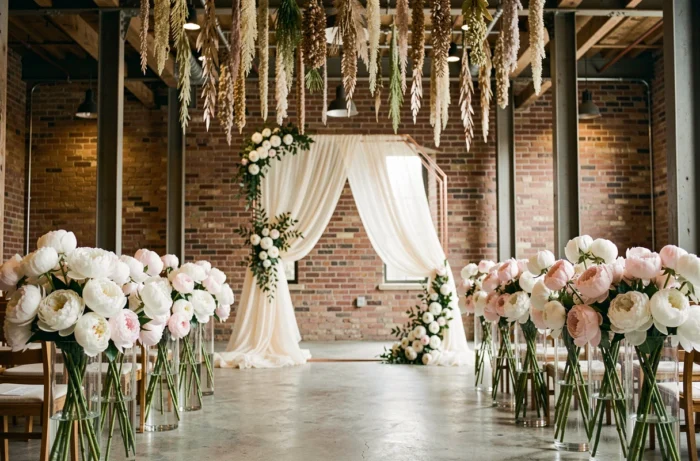
Table Decoration: The Details That Change the Atmosphere
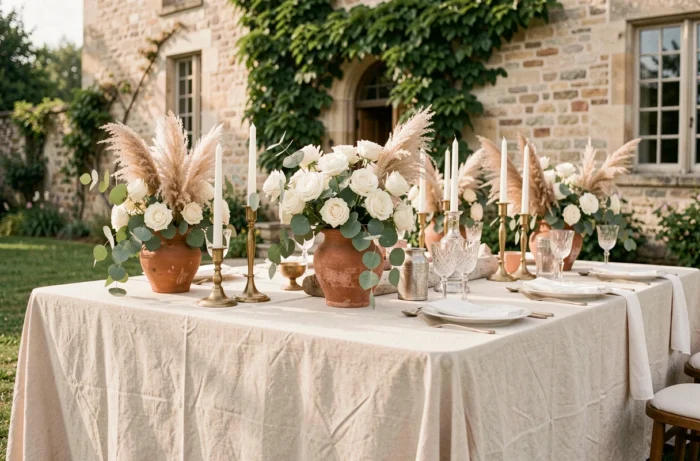
The reception table concentrates the majority of the decoration budget, and that’s normal: guests spend several hours there. Two common mistakes occur. The first is overloading the centerpieces to the point of blocking the view between guests. The second is neglecting evening lighting by relying solely on natural light.
Low or High Centerpieces: Decide Based on the Venue
In a room with a low ceiling, tall floral arrangements on pedestals overwhelm the space. We prefer short arrangements in cylindrical vases, surrounded by tea light candles. Conversely, under a five-meter vault, a low centerpiece gives an impression of emptiness. The height of the centerpiece should match that of the ceiling, not the current trend.
Stationery and Place Cards
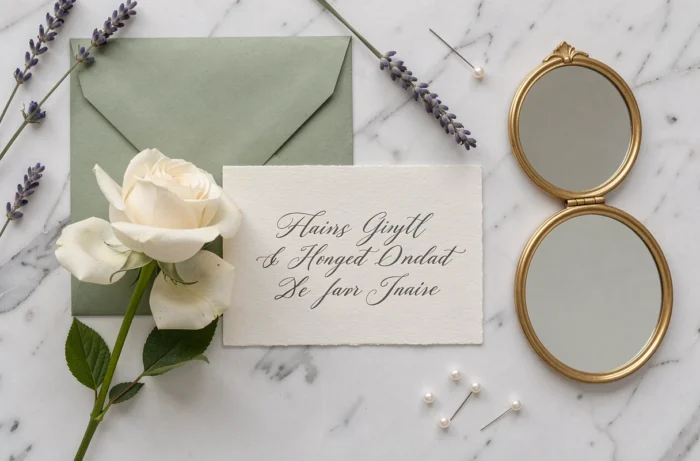
A calligraphed seating plan on a vintage mirror or a wooden board remains an effective visual marker. Individual place cards (a card placed on the plate, a sprig of rosemary tied to a kraft tag) also serve as a first souvenir for guests.
- Textured paper of sufficient weight to stand upright on the plate, printed or hand-calligraphed.
- Table numbers in transparent acrylic or ceramic, reusable from one event to another.
- One menu per table rather than one copy per place setting, which reduces printing costs and paper waste.
Furniture Rental and Sustainable Decor: A Trend That Has Become the Norm
Furniture and decor rental is gaining ground as both an aesthetic and sustainable solution. We now rent wooden arches, brass chandeliers, mismatched chairs, outdoor rugs. The advantage is twofold: we access pieces we would never buy for a single use, and we avoid storing and then discarding after the party.
Renting rather than buying reduces both the budget and waste. Some vendors offer complete packages (dinnerware, glassware, table linens, staging elements) delivered and picked up the next day. Returns vary in quality depending on the rental companies, hence the importance of asking for photos from previous weddings rather than catalog visuals.
Reusable floral arrangements (dried flowers, stabilized foliage) fit into this same logic. They can be prepared weeks in advance without the risk of wilting and can be resold or reused after the wedding.
Immersive Experience: Light, Photobooth, and Interactive Installations
Wedding decoration is no longer limited to elements placed on a table. We increasingly talk about immersive experiences, where light, sound, and interactive installations contribute to the atmosphere as much as the flowers do.
Lighting Design
LED garlands stretched between trees for an outdoor ceremony, candles grouped by the dozens on a corner piece, indirect lighting at the end of the day radically transforms a mundane room. The projection of monograms (the initials of the couple projected onto a wall or floor) adds a personalized touch without cluttering the physical space.
Photobooth and Digital Guestbook
The photobooth remains a classic because it works: guests have fun, create memories, and liven up a lull between dessert and the first dance. Recent versions include a touchscreen, custom filters, and instant messaging.
The digital guestbook (self-service tablet or QR code on each table) complements or replaces the paper notebook. The messages are readable, archived, and guests can add a photo taken during the evening.
- Plan a dedicated area for the photobooth with a neutral or decorated backdrop (flower arch, ribbon curtain, balloon wall).
- Install additional lighting so that the photos are usable, especially in the evening.
- Offer simple accessories (hats, gold frames, signs with messages) that encourage the more reserved to participate.
A wish tree (dry branches on which guests hang cards) remains a physical alternative to the guestbook, with a real visual impact in the room.
The common thread of all these choices remains the same: each decorative element must serve the actual use of the space. A room where people dance has different needs than a garden where people dine. Adapting the decor to the flow of the day, and not just to a mood board, makes the difference between a photogenic wedding and a wedding where guests truly feel comfortable.