A couple hosting in a renovated old farm does not decorate in the same way as a couple investing in an urban rooftop. The venue imposes its constraints, and it is often from these constraints that the most striking ideas for a unique wedding emerge. Rather than piling up Pinterest inspirations, it’s better to start from what is in front of us (volume, light, floor, access) to build a trendy decoration that holds up on the big day.
Wedding Decoration and Venue Constraints: Starting from the Ground
The first common mistake is choosing a decor theme before even visiting the reception venue. One ends up forcing a tropical ambiance in a low-ceiling banquet hall or slapping a rustic decor on a raw concrete terrace.
The effective reflex: visit the venue at the exact time of the reception. The light at 6 PM in June is nothing like that at 2 PM. A space bathed in low sunlight requires little floral decoration; the volumes and shadows do the work. A dark venue calls for bright elements (candles, filament garlands, light tablecloths) much more than an excess of flowers.
Several elements deserve to be noted during this visit:
- The ceiling height, which determines whether floral suspensions or lanterns are feasible without overwhelming the space
- The flooring (grass, parquet, gravel, tiles), which affects the stability of tables, arches, and furniture
- The electrical access points, often underestimated, as they dictate the placement of sound systems, ambient lighting, and catering areas
On mariageetdecoration.com, there are concrete suggestions for adapting the decoration to the specifics of a venue, which helps avoid purchasing unsuitable materials.
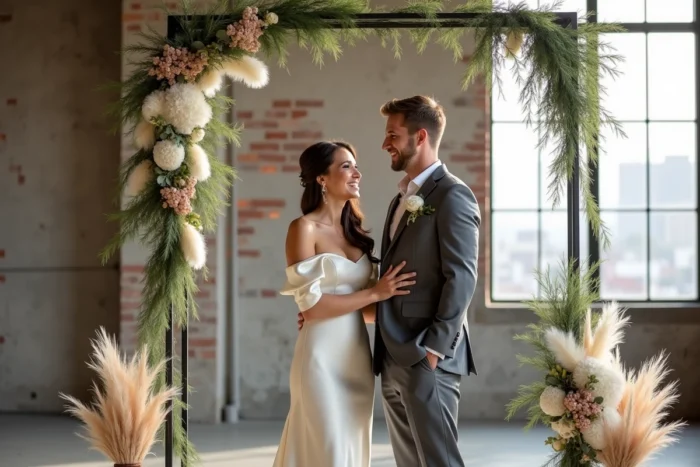
Bold Color Palette: The Trend Replacing “All White”
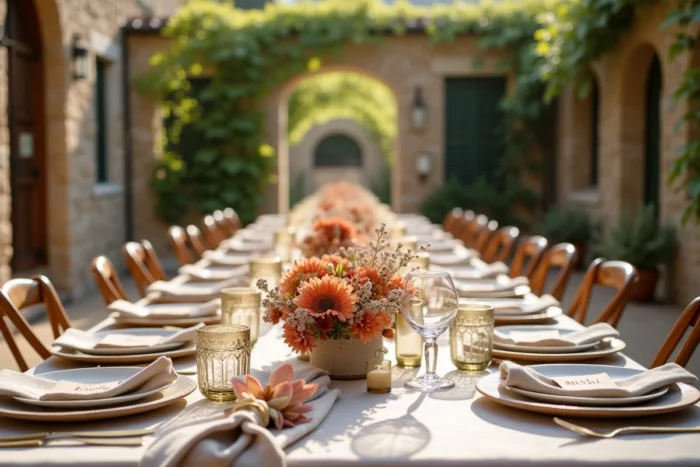
The all-white or pastel wedding is losing ground. The current trend leans towards very bold color palettes, with strong combinations: terracotta and deep burgundy, sage green and mustard, navy blue and copper. This shift is confirmed by specialized decorators and on the accounts of industry professionals.
In practice, one chooses two dominant colors and one accent color. Three shades are enough to give a coherent visual identity to the whole (table, flowers, stationery, bridesmaids’ outfits). Adding a fourth color muddles the reading.
Consistency Between Table and Ceremony
The palette is reflected in each element. For the table, the napkins and table runner carry the dominant color. The tableware remains neutral (white, stoneware, clear glass) to avoid overwhelming the look. The flowers incorporate the accent color in touches, without covering the entire table.
Limiting fresh flowers to focal points (centerpieces, ceremony arch, bouquet) and using foliage or dried elements elsewhere helps maintain a reasonable budget. Artificial floral decorations are improving in quality and realism, and some professionals offer them for rent, which also aligns with eco-design logic.
Food Market Style Reception: Breaking the Classic Seated Meal Format
The seated meal with starter, main course, and dessert served at the table remains the dominant format, but it creates a long period where guests remain fixed in their seats. The rising alternative: food market style reception, with several themed stands or islands spread throughout the space.
Specifically, three to five stations are set up (cheese and charcuterie, world cuisine, barbecues, dessert bar, cocktail corner). Guests circulate, cross paths, and compose their plates. The atmosphere is more relaxed, and the seating plan disappears, eliminating an organizational headache.
Ground Points of Caution
This format requires more floor space than a seated meal. Informal seating (benches, poufs, high tables) should also be provided so that guests are not standing all evening. Feedback varies on this point: some guests love the freedom of movement, while others miss a structured meal. A common compromise is to offer a main dish served at the table, flanked by self-service stations for the starter and dessert.
Ambiance and Lighting: The Element Most Neglected by Couples
We spend weeks choosing flowers and table colors, but lighting is often decided the night before. Yet lighting creates the ambiance of a reception, much more than the decoration placed on the tables.
Three levels of lighting work well together:
- High lighting (hanging garlands, chandeliers, lanterns) that defines the overall volume and creates a luminous vault above the guests
- Medium lighting (candles on the tables, lanterns, small lamps) that sculpts faces and makes photos flattering without flash
- Low or indirect lighting (floor spots, light behind a bar, backlighting of a buffet) that guides movement and highlights key areas
The classic mistake is to rely solely on the venue’s lighting, often neon or overly white ceiling lights. Turning off the main lighting and recreating all the light with added elements transforms any space.
Candles and Safety
Candles remain the simplest way to achieve warm light. Outdoors, glass lanterns protect the flame from the wind. Indoors, check the venue’s rules (some estates prohibit open flames). Good quality LED candles provide a decent effect as a complement, even if they do not completely replace the real flame.
The trend of seeking authenticity rather than perfection is also reflected in lighting choices: exposed filament bulbs, mismatched candle sizes, repurposed lanterns. The decor gains character when it does not look like it came out of a catalog.
Preparing an original wedding relies less on the accumulation of ideas than on the rigor with which each choice is adapted to the venue and the actual format of the day. A mastered color palette, thoughtfully planned lighting, and a reception format suited to the guests produce a more striking result than ten stacked animations without a guiding thread.