An adult’s leisure time in France represents about thirty hours per week according to data from Insee. An increasing share of these hours is consumed by screens: UFC-Que Choisir indicates that the French spend an average of 12 hours per week on social media, which is about 40% of their available free time. Rethinking daily leisure means first understanding where these hours are spent, then deliberately choosing how to occupy them.
Screen Time and Digital Leisure: What the Numbers Reveal
Audiovisual leisure dominates daily life. About 85% of the French use streaming platforms to watch movies and series, ahead of social media (70%) and video games (45%). This distribution shows that digital entertainment structures free time much more than the occasional activities often highlighted.
Casual mobile gaming has established itself as a leading daily leisure activity. The smartphone is the most used gaming device, cited by 56% of French gamers. These short sessions, between trips or in the evening, chip away at time previously dedicated to reading, linear television, or conversation.
Identifying this reality allows for an informed choice. Reducing recreational screen time by a few hours per week frees up a concrete slot to explore other forms of leisure, which must then be identified in advance. The following categories offer concrete ideas, classified by level of engagement, among leisure activities on Gazette Debout and beyond this directory.

Manual and Creative Activities: Leisure That Engages Differently
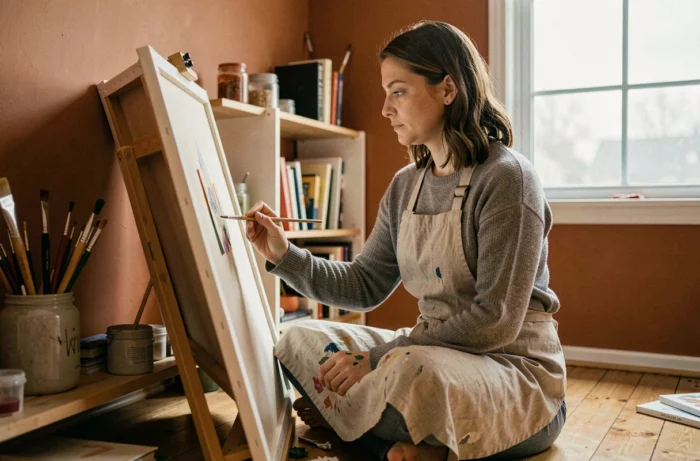
Manual activities provide a direct counterbalance to screen time. Their uniqueness lies in engaging fine motor skills, visual concentration, and often a problem-solving process, three dimensions rarely solicited by passive scrolling.
Workshops at Home or in Groups
Pottery, bookbinding, sewing, or woodworking do not require a heavy initial investment. A beginner workshop in the city often costs less than a monthly streaming subscription. The difference lies in the outcome: a tangible object produced by oneself generates a satisfaction distinct from consuming content.
Cooking workshops fall into this category. Testing unusual recipes (fermentation, technical pastry, cuisine from a specific region) transforms a daily task into active leisure. The time invested is the same as that of a classic meal, but the cognitive engagement is higher.
Board Games and Brain Sports
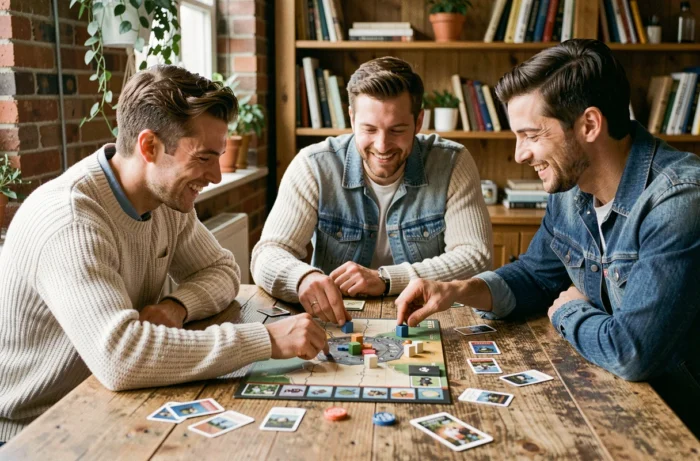
Modern board games (cooperative, narrative, strategic) constitute a group leisure activity that does not depend on the weather or specific equipment. Crossword puzzles, sudoku, or logic puzzles follow the same principle: a voluntary mental effort perceived as recreational.
- Cooperative games (like tabletop escape games): suitable for groups of 2 to 6 people, a game lasts between 45 minutes and two hours.
- Puzzles and brain teasers: solitary or duo activity, adjustable in duration, suitable for short daily slots.
- Tabletop role-playing games: long narrative engagement, ideal for a weekly gathering with friends.
Accessible Physical Leisure Without Heavy Equipment
Recreational physical activity is not limited to club sports. Several practices can fit into a busy schedule without registration or expensive equipment.
Active walking or urban hiking transforms a commute into leisure. Parks, riverbanks, and towpaths in French urban areas offer varied routes. Home yoga, with a simple guided video, takes 20 to 40 minutes and combines moderate physical effort with relaxation.
Outdoor sports remain the most practiced physical leisure in France, according to recent regional data. Running, utility cycling turned into leisure rides, or free swimming in municipal pools are low-cost recurring options.
Immersive Experiences and Cultural Outings: Beyond Passive Entertainment
Escape games, immersive visits, and scripted tours in museums have multiplied in major French cities. These experiences share a common point: they combine storytelling, puzzle-solving, and physical interaction with an environment.
Escape Games and Team Experiences
An escape game involves a team of 2 to 6 people for about an hour. The interest lies in collaboration under time pressure, a format that activates social skills rarely engaged by passive digital leisure. The collective dimension distinguishes these experiences from solitary screen entertainment.
Redesigned Cultural Visits
Museums and cultural institutions now offer interactive formats: theatrical visits, augmented reality tours, mediation workshops. These formats are suitable for families with children, who find a concrete educational leisure activity.
- Thematic guided tours: local history, architecture, street art. Available in most medium-sized cities.
- Botanical parks and gardens: free or low-cost leisure, suitable for all age groups.
- Live outdoor performances: free summer programming in many French municipalities.
Building a Varied Leisure Routine
The main difficulty is not the lack of ideas, but the tendency to fall back on default leisure, the one that requires the least effort to initiate. Data on screen time confirms this: passive leisure prevails when no alternative is planned.
An effective approach is to set aside a fixed weekly slot for active leisure, just like an appointment. Alternating between a physical activity, a cultural outing, and a manual hobby over three weeks creates sufficient diversity to maintain interest without overloading the agenda.
The choice of leisure depends on concrete constraints: budget, available time, geographical proximity, presence of children. Identifying these constraints in advance avoids projects abandoned after a single attempt. A viable daily leisure activity is one that fits the logistical reality of the week, not an ideal vacation scenario.