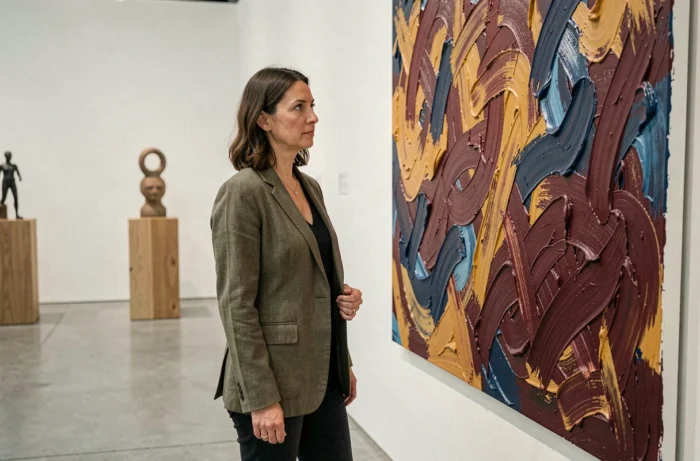
Contemporary art is not just about canvases hanging in a museum. It is a living ecosystem, made up of encounters between artists, collectors, and the curious. Ricci Art fits into this dynamic by offering an approach that goes beyond a simple showcase of works to provide a genuine curatorial program.
Curatorial Program: What Sets Ricci Art Apart from an Online Artist Profile
Most online art platforms operate like catalogs. An artist publishes their works, adds a biography, and waits for a buyer to express interest. The model remains passive.
Ricci Art adopts a different logic, closer to that of a physical gallery. The space functions as a venue for exhibition programming, with a thematic selection of works and a guided reading that helps the visitor understand the intentions behind each piece.
This distinction has concrete consequences for the public. Instead of browsing a grid of images without a guiding thread, the visitor follows a pre-thought-out path. Each exhibition offers a precise angle of interpretation, whether it concerns a material, a technique, or a dialogue between several artists. To learn more about Ricci Art, the site details this approach and the ongoing exhibitions.
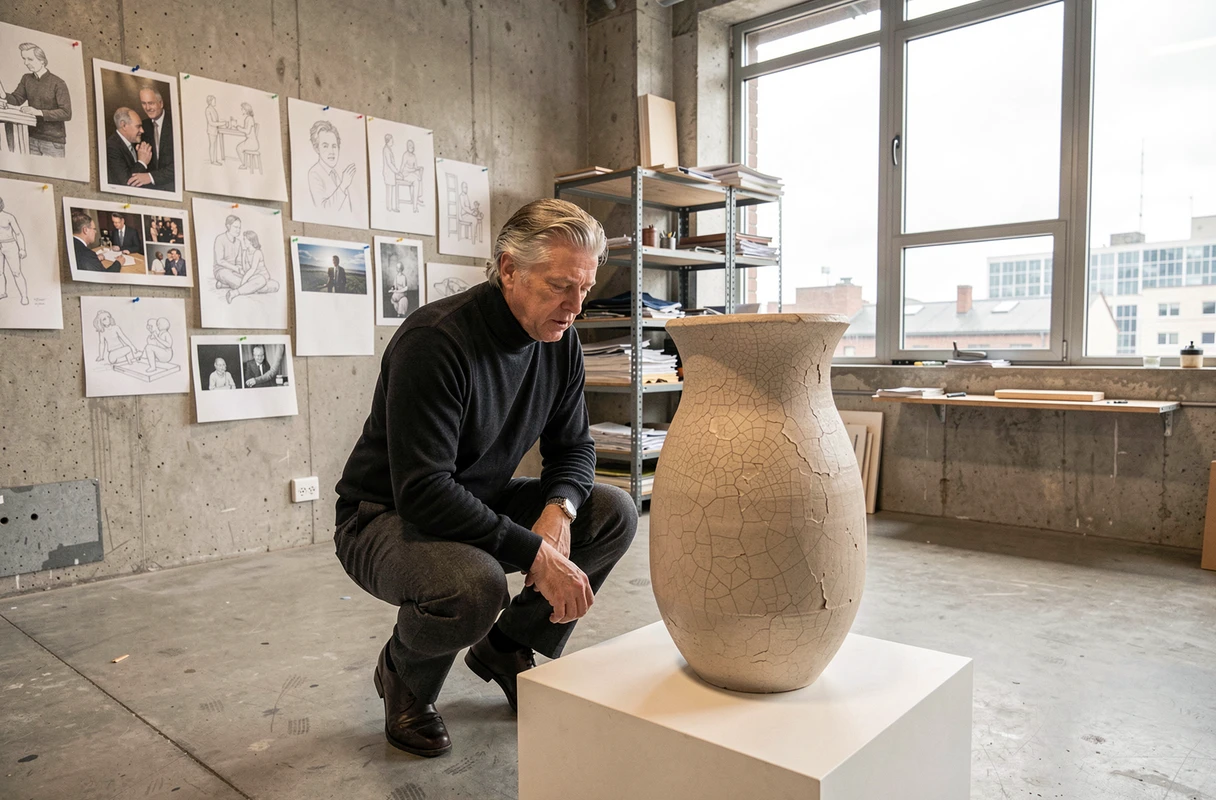
Thematic Exhibitions and Short Formats in Contemporary Art
Have you ever noticed that major exhibitions in museums often last several months, sometimes an entire year? The landscape of contemporary art is evolving towards more concise formats.
Galleries and programming structures prioritize exhibitions centered around a precise reading. One artist, one material, a limited series of works. The goal is to create a concentrated experience rather than an encyclopedic journey.
Why Short Formats Appeal to Galleries
A short format allows for more frequent programming renewal. For a structure like Ricci Art, this means offering multiple angles of discovery throughout the year, instead of relying on a single prolonged hanging.
The visitor benefits from clarity. An exhibition of fifteen works around a unique theme can be explored in about thirty minutes. This is enough to understand the artistic message without feeling overwhelmed.
- A focused theme facilitates understanding, even without a background in art history
- Regular renewal encourages return visits to discover new hangings
- Short formats allow for highlighting emerging artists, not just established names
Contemporary Art Online: Multi-Artist Gallery vs. Profile Page
The online art market has long been structured around individual profiles. Each artist manages their page, publishes their works, sets their prices. Platforms like ArtMajeur or Catawiki operate on this marketplace model.
The trend is shifting towards multi-artist and multi-format portals. The idea is no longer to list works but to create a context around them. An online gallery that programs virtual exhibitions offers a reading framework that an individual profile cannot produce alone.
How the Visitor Sees Differently
On a traditional artist profile, the visitor sees a chronological or thematic sequence of works. The connection between them remains implicit. In a gallery-curation space, each hanging tells a story: a dialogue between techniques, a narrative thread, an assumed visual tension.
For a novice collector, this contextualization is valuable. It replaces the interpretative work that a gallery owner would do in person, explaining why one work dialogues with another.

Mediation and Discovery: Making Contemporary Art Accessible
Contemporary art sometimes suffers from a reputation for exclusivity. The codes are not always explicit, and the technical vocabulary can discourage an uninitiated audience.
Mediation transforms a passive visitor into an engaged spectator. This involves clear accompanying texts, guided paths, and a presentation that does not assume academic prerequisites.
Ricci Art integrates this dimension by providing an accessible reading framework. The visitor does not need to know the artistic movements of the twentieth century to appreciate an exhibition. The keys to understanding are provided directly, in everyday language.
Hybridization Between Physical and Digital
The cultural sector is increasingly exploring hybrid formats. An exhibition can exist physically in a location, then extend online with complementary content. Digital does not replace the encounter with the artwork; it prepares or prolongs it.
This approach also allows reaching an audience that is geographically distant. An art enthusiast in Toulouse or Brussels can discover programming without traveling, then decide to see the original works if the opportunity arises.
- Online content (texts, videos, virtual tours) expands a gallery’s audience beyond its geographical area
- The physical-digital complementarity enhances the overall visitor experience
- Emerging artists benefit from visibility that a local hanging alone could not offer
Contemporary art benefits from being presented in a framework designed for the public, not just for the market. Structures that combine curatorial programming, accessible mediation, and coherent digital presence meet a real need: to make current creation understandable without oversimplifying it. Ricci Art is part of these initiatives that take this challenge seriously.