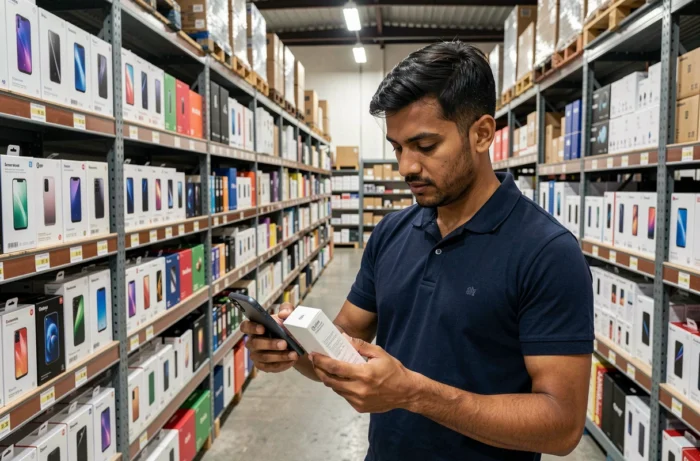
A factory supplier in the mobile phone sector refers to a manufacturer or assembler that sells its products without going through traditional distribution channels (regional wholesalers, purchasing centers, authorized resellers). Buying at this level of the supply chain mechanically reduces the unit price but exposes the buyer to regulatory, logistical, and quality constraints that clearance platforms do not always mention.
GPSR Regulation and Cyber Resilience Act: Obligations for Smartphone Importers
The Regulation (EU) 2023/988 (GPSR) has been applicable since December 13, 2024, to all consumer products marketed in the European Union. Smartphones are included, whether new, refurbished, or second-hand.
Specifically, the importer must ensure that the manufacturer has conducted a risk analysis and maintains technical documentation for ten years. A product identifier, the name, and the address of the responsible person must appear on the product or its packaging. The regulation also requires the designation of a Responsible Person established in the EU, which renders the direct purchase scheme from Asian factories without a European intermediary obsolete.
A supplier unable to produce this documentation poses a serious business risk. A refusal to market or a product recall largely negates the margin obtained on the purchase price. Before any order, the technical documentation and the identity of the Responsible Person must be requested in writing.
The Cyber Resilience Act (CRA) will gradually come into effect starting in September 2026. It will require manufacturers to provide software security updates for a duration defined by the regulation. Small Chinese factories lacking post-sale software tracking capabilities will effectively be excluded from the European market.
Searching for affordable mobile phones from factory suppliers therefore implies selecting manufacturers capable of ensuring this compliance, and not simply those offering the lowest price.

Direct Factory Sourcing: Platforms, Hubs, and Checks to Conduct
Most factory suppliers for smartphones are located in China. Shenzhen remains the world’s main hub for phone assembly. Vietnam and India are gaining traction, particularly on Samsung lines and certain Apple models, but the most diverse OEM offerings still come from China.
Sourcing Platforms to Know
Alibaba, through its Electronics section, remains the most common entry point for contacting manufacturers. The platform differentiates verified “Gold Suppliers” from intermediary resellers. However, this certification does not guarantee GPSR compliance or the quality of the finished product.
Three checks must precede any order:
- Request a factory audit report (such as BSCI or ISO 9001), then cross-reference it with the certifying body’s database. A certificate without a verifiable number has no value.
- Require a pre-production sample to assess assembly quality, actual battery life, and frequency band compatibility with European networks.
- Confirm that the supplier can provide a compliant CE marking and a usable EU declaration of conformity, not just a simple CE sticker without associated documentation.
Minimum Quantities and Price Negotiation
OEM factories generally impose a MOQ (Minimum Order Quantity). The unit price decreases with volume, but the financial risk increases proportionately. For a first order, a reduced MOQ, even at a slightly higher unit price, allows testing the supplier’s reliability without tying up too much capital.
Refurbished Smartphone or New Factory Phone: Decide Based on Usage
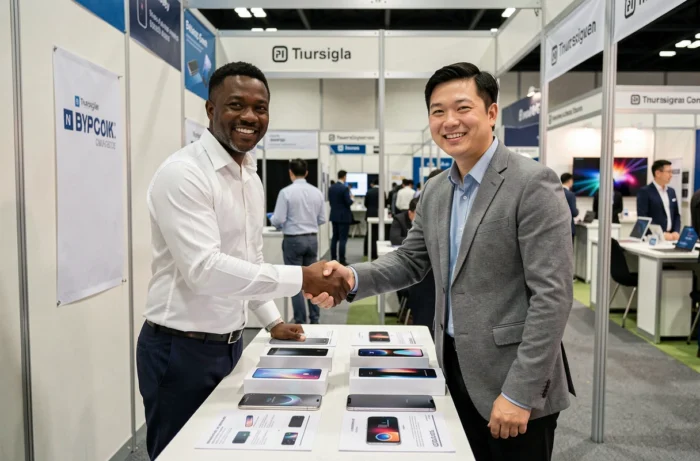
Direct factory sourcing mainly concerns new phones. These are often lesser-known brands in Europe or OEM models without branding (“white label”). Refurbished phones follow distinct channels: specialized wholesalers who buy corporate fleets, consumer returns, or leasing devices.
The choice between new factory and refurbished depends on the target market. A reseller targeting consumers attached to a brand (iPhone, Samsung Galaxy) will benefit more from quality refurbished phones, with documented aesthetic grades and a structured warranty. A reseller focused on price (entry-level export, professional fleets) will find a tangible advantage in direct sourcing.
Refurbished Apple or Samsung devices benefit from a software ecosystem maintained by the original manufacturer. OEM smartphones purchased from factories, on the other hand, rely entirely on the manufacturer for updates. This point becomes critical with the gradual implementation of the Cyber Resilience Act.
Common Pitfalls of Factory Sourcing in Mobile Telephony
Some recurring mistakes are made by buyers new to direct sourcing:
- Confusing a trader (an intermediary who buys and then resells) with a true manufacturer. On Alibaba, many “factory suppliers” are trading companies based in Shenzhen that do not assemble anything themselves.
- Neglecting customs duties and import VAT. The FOB (Free On Board) price quoted by the factory does not include freight, taxes, or customs clearance fees. The actual import cost often significantly exceeds the factory price.
- Ignoring network compatibility. A smartphone designed for the Chinese or Indian market may not necessarily support the frequency bands used in Europe. An entire batch can become unsellable.
- Ordering without a written contract specifying return conditions, the replacement time for defective units, and the distribution of responsibilities in case of regulatory non-compliance.
Direct sourcing from factory suppliers remains a viable approach to obtaining competitive prices on mobile phones. Regulatory compliance and quality verification should be treated as prerequisites to ordering, not as formalities to be settled afterward.