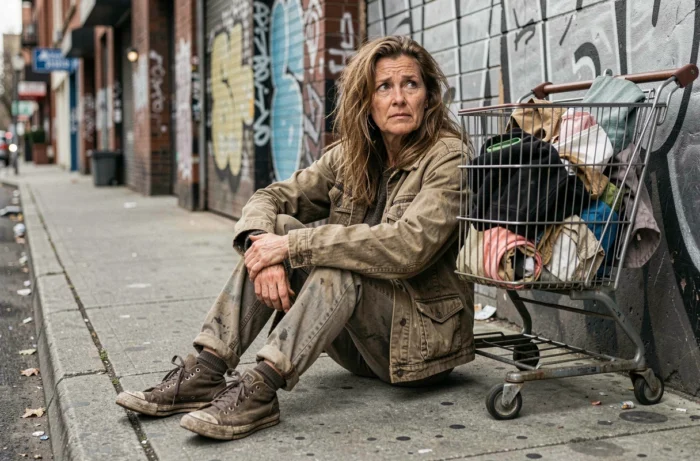
Loni Willison was a fitness model, the wife of a well-known actor, and then homeless on the streets of Los Angeles. The photos regularly published by the British and American tabloids document a visible physical decline over several years. Behind these repeatedly shared images, the factual timeline of her life reveals shadowy areas that the usual media narrative does not fill.
Absence of institutional support since the failed rehab attempt in 2018
Most articles dedicated to Loni Willison stop at the visual observation: a woman pushing a shopping cart, rummaging through trash, sleeping outdoors. The most documented point, yet the least covered in French-speaking media, concerns the complete lack of structured social or medical support since a failed attempt at rehabilitation in October 2018.
Timelines published in 2026, based on archives from RadarOnline, Mirror, and Daily Mail, confirm that no official organization or family member has publicly communicated about her exit from homelessness. Her status does not appear in any known local administrative database, according to summaries from Dagens Press and Dagens Rapport.
This administrative void raises a concrete question. In California, the system of assistance for homeless individuals largely relies on the beneficiary’s willingness. A person suffering from addiction and mental health issues can refuse any intervention, without local authorities having the mandate to impose shelter or care.
When tracing Loni Willison’s story, this legal mechanism partly explains why her situation has persisted for years without any structure stepping in.
Marriage to Jeremy Jackson and domestic violence: the verifiable timeline
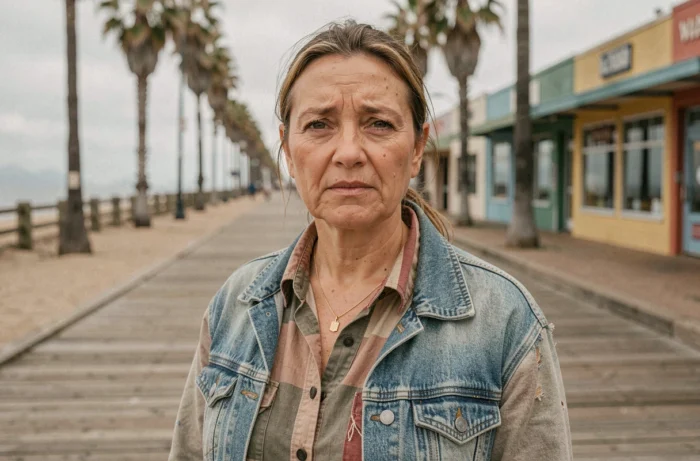
Loni Willison married Jeremy Jackson, known for his role as Hobie Buchannon in Baywatch, in 2012. The divorce was finalized in 2014. On this occasion, Loni Willison stated that she had been a victim of domestic violence.
Jeremy Jackson himself has been subject to separate legal proceedings and has faced documented addiction issues in his updated biography on Wikipedia as of April 2024. This context sheds light on the couple’s dynamics beyond the narrative solely focused on Loni Willison’s downfall.
The available data does not allow for a conclusion about the exact role of the divorce in her descent into homelessness. Several elements overlap during the same period:
- The divorce in 2014, accompanied by accusations of domestic violence made public by Loni Willison herself
- The documented emergence of an addiction to methamphetamine, a substance with rapid neurological and physical effects
- The successive loss of her job, housing, and car, culminating in living on the streets
Attributing her situation to a single factor, whether the divorce or drugs, simplifies a trajectory with several links that remain publicly undocumented.
Methamphetamine and inhalation of volatile substances: what recent photos show
Mainstream articles mention “the drug” without specifying which substances are involved. English-language sources identify methamphetamine as the primary addiction. Photos published by OK! Magazine in October 2024 add a rarely mentioned element in French: Loni Willison appears to be inhaling spray paint, indicating the use of volatile substances in addition.
Inhaling solvents or paint is a practice associated with extreme precarity. It causes brain, heart, and liver damage, often irreversible. This visual detail, captured by paparazzi, goes beyond mere photographic shock: it documents active poly-addiction in a person living without any known medical follow-up.
The line between documentation and voyeurism
Each series of photos reignites an identical media cycle: outrage, massive shares on social media, then forgetfulness. The images circulate on Facebook, where pages like Icônes or Gentsu accumulate hundreds of thousands of views with sensationalist captions.
None of these publications mention any concrete steps to direct Loni Willison towards a support structure. The photos serve the narrative, not the person. This mechanism raises a recurring ethical issue in the media treatment of known homeless individuals.
Loni Willison in 2024-2026: what the latest observations confirm
The most recent media observations, documented until October 2024 and relayed by summaries published in August 2026, confirm several points:
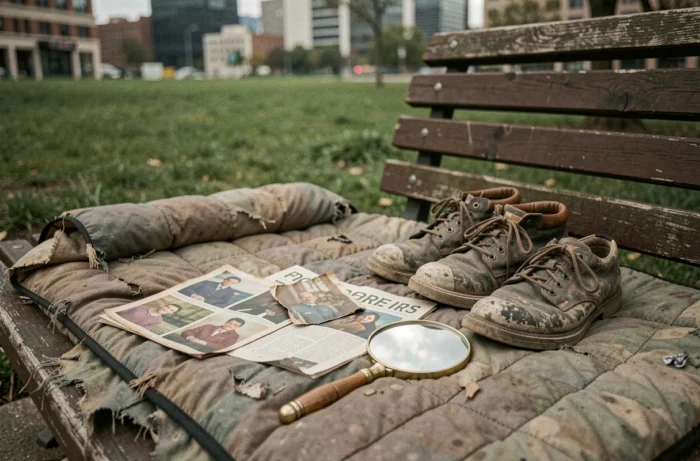
- Loni Willison is still homeless in Los Angeles, with no apparent change in her situation
- No family member or organization has communicated about any potential support
- Her physical appearance continues to deteriorate compared to photos from previous years
- No trace of a care pathway has been identified in local administrative databases
Field reports diverge on one point: some sources claim she actively refuses any help, while others suggest that no structured offers have been made to her recently. Neither of these two versions is verifiable from the available public documents.
The journey of Loni Willison, former fitness model turned homeless in Los Angeles, remains a case where the documentary gaps are as revealing as the established facts. What the photos do not show is the absence of a safety net once a person falls off the California administrative radar.