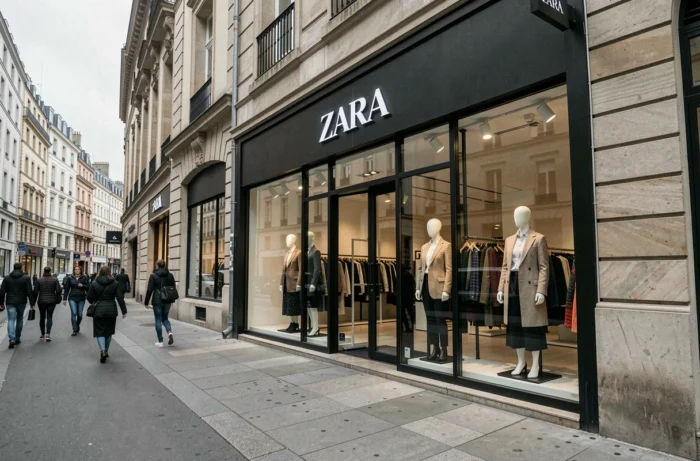
Zara has been closing stores for several years, and rumors of a total disappearance resurface regularly. However, the Inditex group, Zara’s parent company, continues to post record financial results. So, should we really expect to see Zara stores close their doors in 2026?
Fewer Zara stores, but larger spaces
You may have noticed the closure of a Zara in your city. This is not a coincidence. The Inditex group has been deliberately reducing the number of its retail outlets for several years.
As of the end of January 2026, Inditex operated 5,460 stores worldwide, including 2,089 for Zara and Zara Home. This figure is at its lowest in about fifteen years. The group is closing small downtown shops and replacing them with flagship stores, those large showcase stores located in major cities.
The topic of Zara store closures in 2026 fuels discussions, but the mechanism is more subtle than a simple disappearance of the brand.
Inditex is not withdrawing from physical retail. It is focusing its resources on premium locations with larger sales areas. Each new store generates more revenue than the two or three small shops it replaces.

Inditex Financial Results 2025: Records Despite Closures
The paradox deserves to be stated clearly. Inditex is closing stores, but its profits have never been higher.
In the 2025 fiscal year, the group posted a record net profit of €6.22 billion. Revenue approached €40 billion. These results place Inditex far ahead of its direct competitors in accessible fashion.
Why this discrepancy between closures and profits? The answer lies in three points:
- The remaining large stores capture an increasing share of customer traffic, with prime locations in major cities
- Online sales more than compensate for the reduction in the physical network, with continuous growth in the digital channel
- The rise in average prices per item, accepted by the group, boosts revenue per square meter
Zara is not suffering from its closures. The group chooses to reduce its network to increase its profitability.
China and India: Two Markets Illustrating Zara’s Strategy
The Chinese case is telling. Zara had 183 stores in mainland China in 2018. By March 2026, only about 60 remained. The group closed stores in cities like Fuzhou and Wuxi, and even a historic flagship that had been open for 14 years in Jinan.
Zara is retreating to major Chinese metropolises like Shanghai or Beijing, where the clientele still aligns with the brand’s positioning. Local competition, particularly Shein and rapidly expanding Chinese brands, has encroached on the market in secondary cities.
In India, the situation is different but equally instructive. The network remains stable with 22 stores. The problem lies elsewhere: Zara’s profit in India fell by about 32% in the 2026 fiscal year, with revenues slightly declining. The Indian market remains difficult for European fast fashion to penetrate.
These two examples show that Inditex adjusts its physical presence country by country, without applying a one-size-fits-all approach.
Zara vs. Shein: Online Sales Change the Game
The rise of Shein has reshuffled the cards of global ready-to-wear. Nevertheless, Zara remains one of the few brands to withstand this direct competition in the accessible fashion segment.
How? By playing on two fronts that Shein does not master as well:
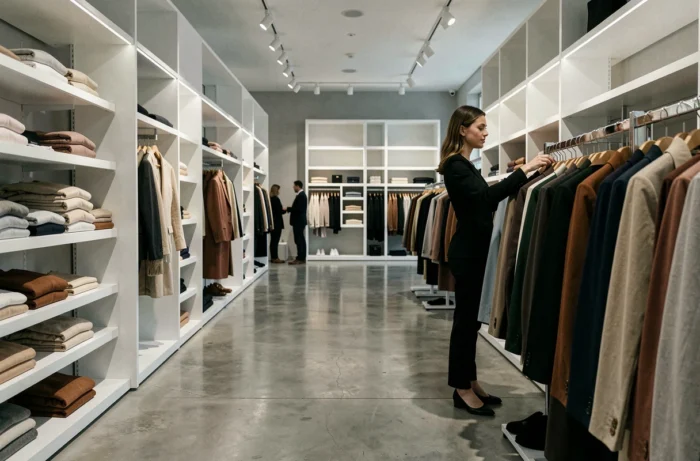
- The in-store experience, with shops designed as places of discovery, not just simple stock on hangers
- A very short collection renewal cycle, comparable to that of Shein, but backed by an efficient physical logistics network
- A brand image perceived as more qualitative, allowing for higher prices
The Inditex group does not bet everything on digital. It combines flagship stores and online sales to create an ecosystem where each channel feeds into the other. A customer tries in-store, orders online. Or vice versa.
Bershka in the United States: Inditex Invests Elsewhere
While Zara closes small shops, Inditex is opening new fronts. The Bershka brand, targeting a younger clientele, is preparing to launch in the United States. The group inaugurated a new store concept in Spain in July 2026, before rolling out the brand across the Atlantic.
This move confirms that Inditex’s strategy is not limited to Zara. The group diversifies its brands and markets. The closures of Zara partially finance the expansion of other brands within the group.
The question is therefore not whether Zara will disappear. It is to understand that the group is restructuring its brand portfolio to increase overall profitability.
The Zara stores of 2026 no longer resemble those of 2015. They are fewer in number, larger, better located, and individually generate more revenue. Inditex’s figures do not reflect a decline, but a change of model that has been embraced for several years.